Pain on the outside of your hip that ruins stairs, walks, and sleeping on your side has a name most doctors still get wrong — and the name matters, because it's the reason so many treatments only work for a while.
An ache on the outside of your hip after a long walk, or a twinge on the stairs. Then one night you roll onto that side in bed and it wakes you up — and from then on, that's the side you can't sleep on.
Months go by. You rest it; it calms down, then comes right back. Maybe your doctor called it hip bursitis and suggested ice and an anti-inflammatory. Maybe you got a cortisone shot, and for a few glorious weeks it was gone — until it wasn't.
If that story sounds familiar, you're in well-studied company. Pain over the bony point of the hip — what medicine now calls greater trochanteric pain syndrome (GTPS) — accounts for one in every five to ten hip-pain visits to a primary care doctor. It's most common in women between 40 and 60, and it has a well-earned reputation for outlasting every quick fix thrown at it.
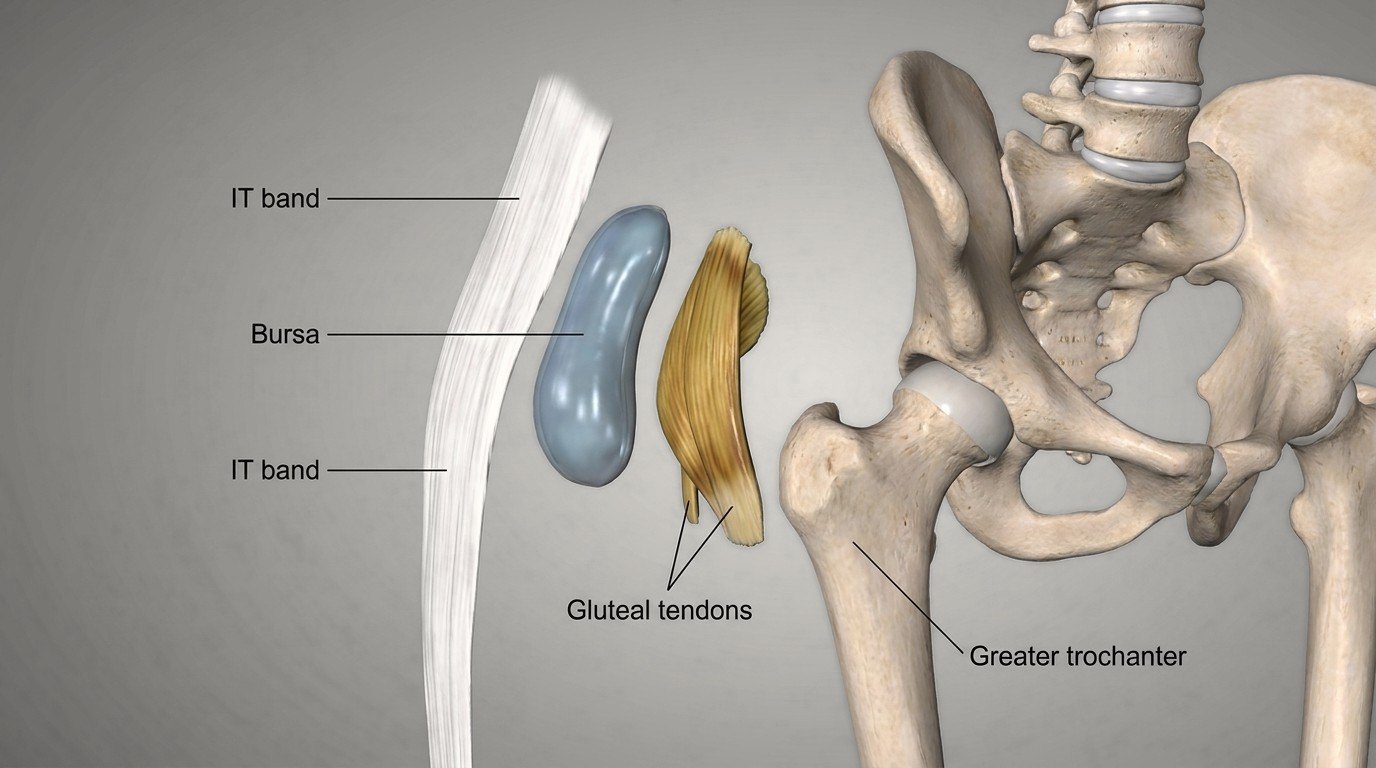
Feel the widest point of your hip — that hard knob of bone on the outside. That's the greater trochanter, part of your thigh bone. It's the anchor point for the tendons of your gluteus medius and gluteus minimus — the deep hip muscles that hold your pelvis level every single time you stand on one leg. Which is every single step you take.
Draped over that bone and those tendons is a thin cushioning sac called a bursa, and over everything runs the iliotibial band — a long strap of dense tissue from your pelvis to your knee.
So it's safe to say the greater trochanter area is actually several tissues all layered on top of each other — and historically, the bursa is the one that ended up getting the most attention.
For decades, pain here was blamed on the bursa: "trochanteric bursitis," an inflamed cushion. It's a tidy story. It's also, in most cases, not what's happening. When researchers actually looked — in surgical specimens, on MRI, under the microscope — the bursa was often quiet. The real problem, over and over, was the gluteal tendons themselves: frayed, disorganized, and worn down where they attach to the bone. The medical term is gluteal tendinopathy.
That's why the name changed from "trochanteric bursitis" to "greater trochanteric pain syndrome." And it's not academic hair-splitting. "-itis" means inflammation — and inflammation is treated by calming things down. Rest, ice, anti-inflammatories, cortisone. But a worn, stalled tendon isn't a fire to put out. It's a structure that has stopped repairing itself. Calming it down feels better for a while — and changes nothing about why it hurts.
Every condition we treat comes down to the same two-part equation, and this one is a textbook case: a tissue under more load than it can recover from, slowly becoming sensitized.
For the gluteal tendons, the trouble is a double load. These tendons anchor to the top of the greater trochanter — so whenever your thigh crosses toward (or past) your body's midline — a position called adduction — the tendon gets pulled taut: lengthened under load, carrying tension stress right at the point where it attaches. And in that same position, the iliotibial band tightens over the trochanter and compresses the stretched tendon against the bone underneath it. Tendons handle ordinary pulling well. A tendon stretched past what it can comfortably handle and pressed against bone at the same time — that it handles much less well, and each episode adds a little more microtrauma where it attaches.
That loop is the engine of the whole condition: the weaker the tendons get, the more overload they take; the more overload they take, the weaker they get. It's why this condition so rarely fixes itself once it's established. And this double load doesn't only happen while you're moving — look at where it shows up in ordinary life:
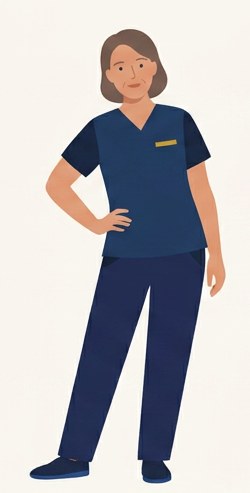 Hanging on one hip
Unloading one leg drops the pelvis — and pulls the standing hip's tendon taut against the bone.
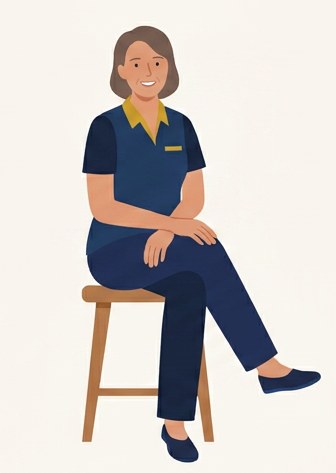 Sitting with knees crossed
Crossing holds the tendon in a lengthened position — tension plus compression, for hours.
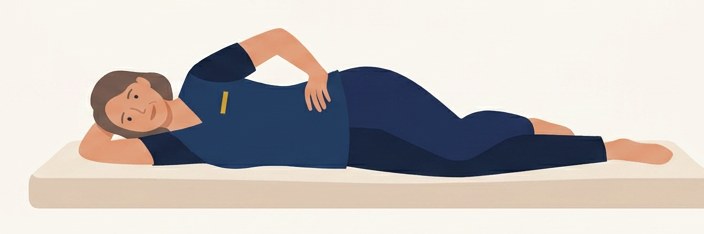 Sleeping on your side
Bottom hip pressed on the mattress; the top leg crossing over stretches its tendon while pressing it into the bone. Both sides lose.
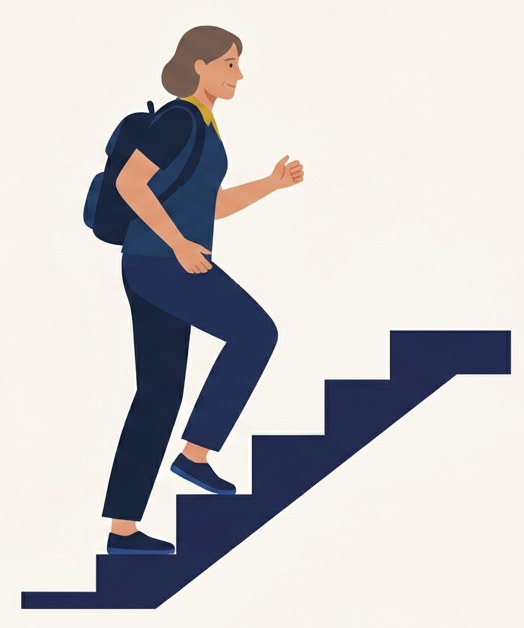 Walking & stairs
If the pelvis dips, every step stretches and squeezes the tendon a little — thousands of times a day.
The usual triggers are load spikes and load changes: a new walking program, a hilly vacation, a fall, a season of long days on your feet — or sometimes nothing you can point to at all.
The 40–60 female pattern isn't an accident either: pelvic proportions that increase the resting angle of hip adduction, and hormonal changes around menopause that affect tendon quality, both stack the deck. Add the modern default of sitting — knees together, tendons compressed — and it's a common recipe.
None of that is a character flaw or an age sentence. It's mechanics — and mechanics can be examined, measured, and changed.
Rest removes the activity, but not the positions. You still sit, still sleep — and if the pattern that overloads the tendon lives in how your pelvis is controlled, you carry the problem into every step of your "rest."
Meanwhile a tendon that's deep into this process has often stopped trying to heal — the repair response has stalled. Take away the insult and you get quiet, not repair.
That's the dividing line that determines treatment: early, irritated tendons settle when you unload them. Late, stalled tendons usually need something that restarts the repair process. It's the same lesson Dr. Barton learned personally with his own Achilles tendons — he tells that story here.
Everything above converges on a simple treatment logic — the same loading model we apply to every tendon in the body.
Not a glance-and-a-shot — an actual biomechanical exam. We confirm it's the gluteal tendons and not the hip joint, the low back, or something that needs imaging or a surgeon (and if it is, we say so — that's the deal). Then we stage the tendon honestly: irritated, struggling, or stuck. The stage — not the calendar, not a package — determines what happens next.
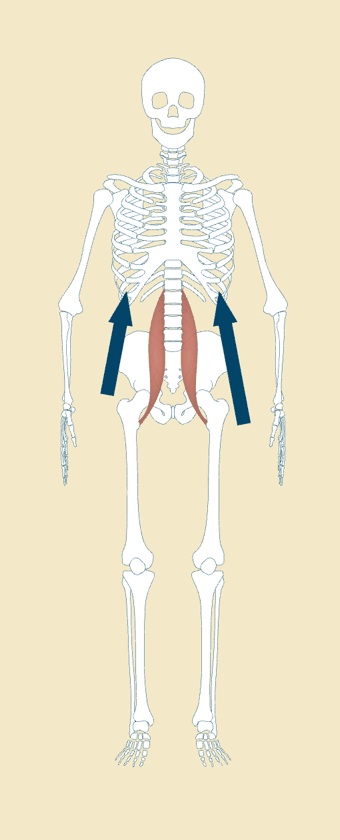 Uneven hip flexors (psoas)
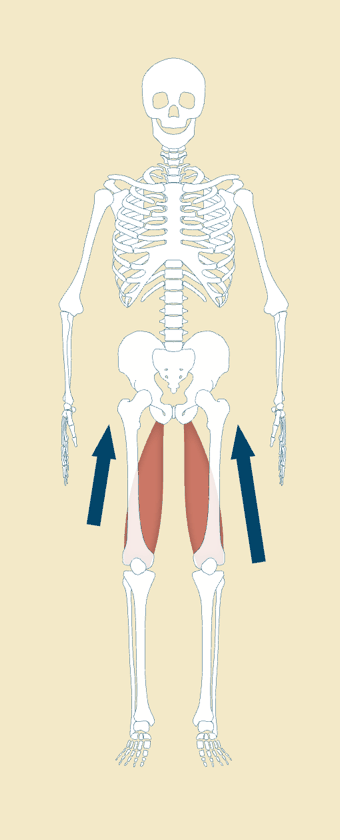 Uneven hamstrings
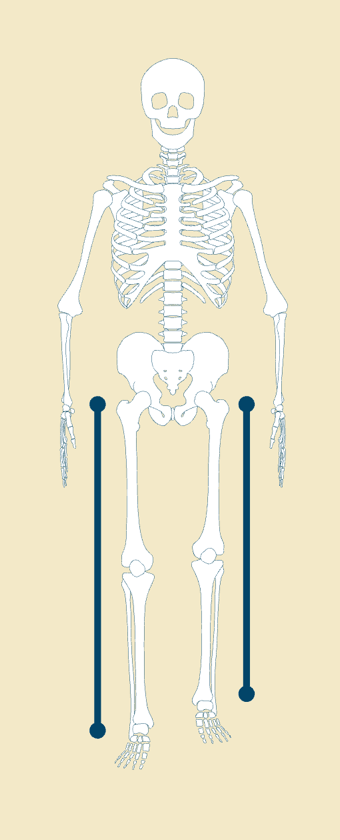 True short legRare
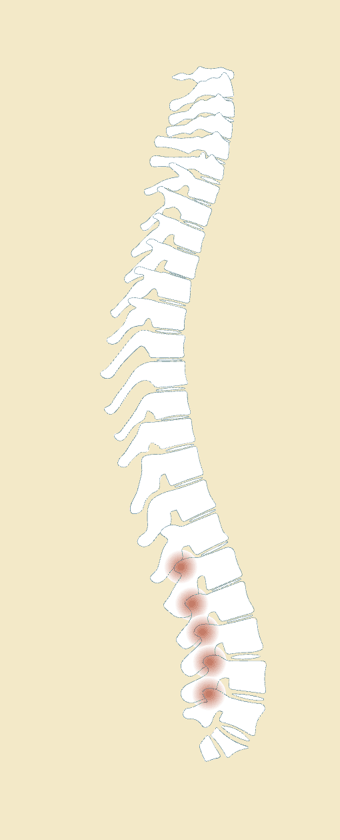 Facet joint tightnessLow back
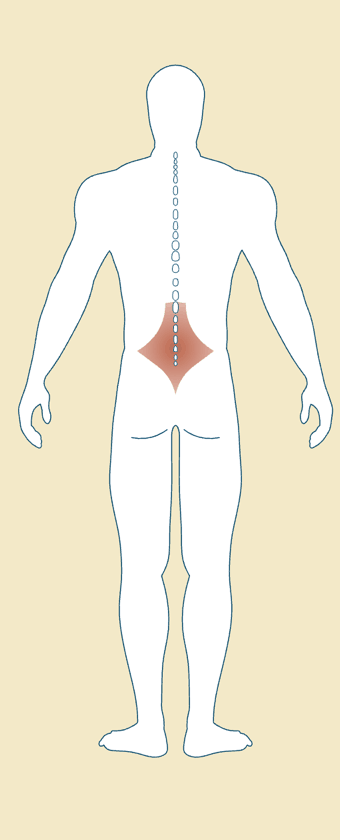 Lumbar fascial tension
You leave the first visit knowing the compression story and exactly what to change: the sleeping setup (pillow between the knees; keep the top knee level with the hip), the sitting and standing habits, which exercises to stop (the cross-body stretches), and what your walking and stair volume should look like while the tendon calms.
None of this costs anything. All of it is load off the tendon, 24 hours a day. Skipping this step is why treatments fail — you cannot stimulate a tendon back to health while it spends all night stretched over the bone and all day loaded on a dropped hip.
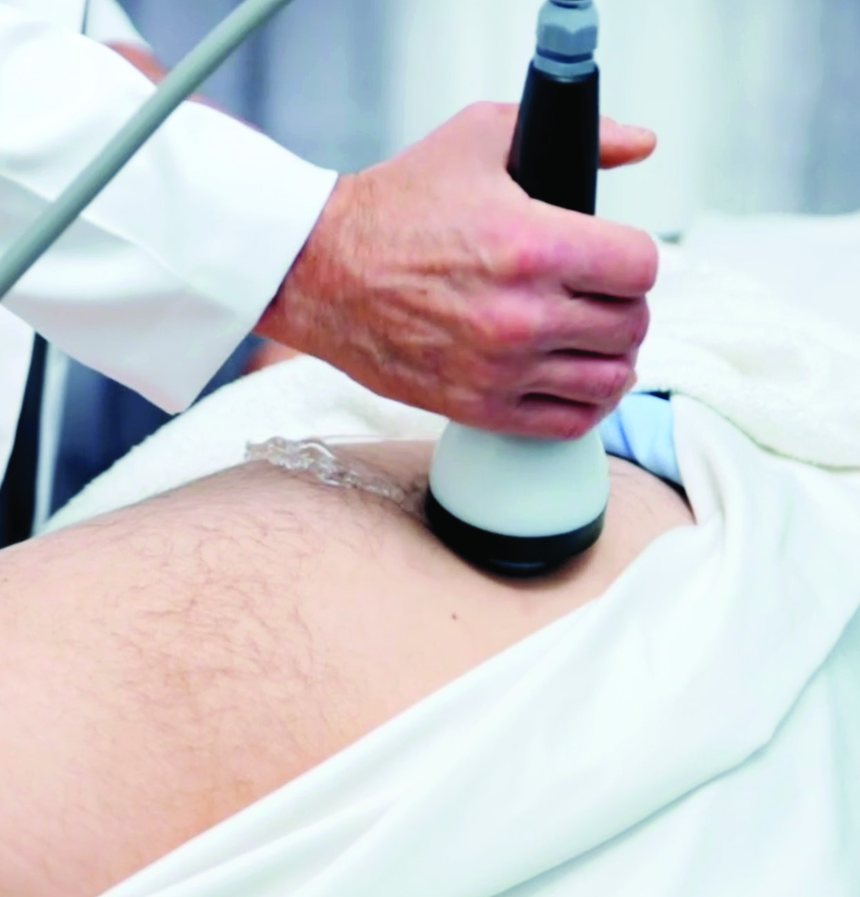
If the exam says your tendon is past the stage where unloading alone will do it — and after years of symptoms, it usually is — this is where StemWave therapy comes in: focused acoustic waves delivered precisely to the affected tendon. Researchers call the mechanism mechanotransduction — cells respond to the dosed mechanical signal with increased local blood flow and renewed repair activity, the response the tissue stopped producing on its own. It's the wake-up call, not the whole recovery: the tendon still rebuilds the way tendons always rebuild — gradually, under progressively managed load.
We find the spot by exam and by your feedback, treat it that day, and you feel what a session is like before committing to anything. Sessions are brief, needle-free, no downtime. A course runs five to ten visits depending on severity — chronic cases usually need the full ten — and you'll know the plan and the price before you start.
As the tendon desensitizes, we progressively strengthen the gluteals — pelvis-leveling work in positions that keep the tendon out of that double load — because a strong hip is what keeps this from coming back. And this is where the pelvic distortion findings from your exam get their treatment: while we're treating the tendinopathy itself at the greater trochanter, we're also working to balance the hip flexors and hamstrings and restore joint and fascial function in the low back — whatever was pulling the pelvis out of level.
The tendon gets the stimulus; the chain that overloaded it gets the correction. Then we release you. No year-long plans, no memberships. Boosters if you ever need them — the dental-checkup ethos, same as everything else we do.
Years of the same hip pain. The same advice on repeat. Hear one patient describe what it's like to live with this condition for years — the sleep, the frustration, the treatments that kept wearing off — in his own words.
His experience is his own — every hip gets its own exam and its own answer.
The next step isn't a commitment — it's the exam, the staging, and if you're a candidate, a test treatment the same day. You feel what a session does before you decide anything.
We can't promise outcomes — no honest doctor can. We promise a flat $65, an exam that looks above the hip as well as at it, and a straight answer: shockwave fits your case, or it doesn't and here's what does.
Or skip the form and just call — (281) 991-3002
$65 offer not available to Medicare, Medicaid, or other federal health program beneficiaries. This visit determines whether shockwave fits your case; it is not a promise of outcome. Requests are confirmed by a call from our staff.
Here's the honest answer: with several tissues layered on top of each other, it's hard to tell exactly how much pain is coming from the bursa and how much from the tendons — and often both are involved. So we treat for the tendinopathy and expect the bursa to calm down along with it. Your own history is actually one of the best clues: rest, ice, and injections are bursitis treatments, so if you've already been down that road and the hip still hurts, you can be pretty confident there's a high tendon component. That's exactly the case where leveling the pelvis and treating the tendon with shockwave earns its place — taking the extra load off while stimulating the tendon's repair, so symptoms can settle as the tissue heals.
Side-lying loads both hips at once — the bottom one is pressed against the mattress, and the top one drops across midline, stretching its tendon while pressing it into the bone. A firm pillow between knees and shins (keeping the top knee in line with the hip) is the single highest-value free change most people can make tonight.
For this condition, no — cross-body and iliotibial-band stretches pull the sore tendon to its longest while pressing it against the bone, the exact combination that damages it. The tight feeling is a symptom of an overloaded tendon, not a flexibility problem.
One shot is not a catastrophe, and the relief window can even be useful. But the trials are clear that injections alone lose to load management over a year, and repeat injections raise concerns for tendon quality — so the shot should never be the whole plan.
Usually not — this is a clinical diagnosis, made with validated exam tests. Imaging earns its place when the story is atypical or the exam suggests a tear. If you already have imaging, bring it; we read it with you, in plain English.
It depends on severity, but treatment courses run between five and ten sessions, sized to your case at the evaluation — and if the problem has been chronic, plan on the full ten. Then we do something that surprises people: we stop. We discontinue treatment and monitor the hip over the next three months, because tendon healing doesn't end when the sessions do — most patients continue to improve after the course is complete. The last visit isn't the finish line; it's where the tendon takes over. Booster treatments are sometimes needed down the road, case by case — but no open-ended plans, and you'll know the plan and price before you start.
You've rested it, iced it, maybe injected it. If it were going to resolve on its own, it likely would have by now. One $65 evaluation names the problem, stages it honestly, and tells you whether our approach fits.